

Director: Paul Hairston (2019)
Film length: 9:11
Available on Short of the Week: https://www.shortoftheweek.com/2020/03/15/lions-in-the-corner/
Key words: violence; fight-club; community; conflict-resolution; cinematic; multimedia; documentary
Is all violence bad? Lions in the Corner is an award-winning short film that aims to answer just that. It follows the story of Scarface – an ex-convict who found his purpose in the creation of the fight club known as “Street Beefs”. Street Beefs was made as a safe space for people in the community to resolve conflict in a controlled environment rather than out on the streets where people could get seriously hurt. Beyond the fighting, the strongest theme is this sense of belonging and purpose that he has brought to those who otherwise may not have it.
The director, Paul Hairston, was born and raised in Virginia in the same town where the backyard fight club was founded. This town has always been known for its alarmingly high street violence rate and Street Beefs has since made a significant and known impact on its decline. The director worked closely with Scarface for the mutual interest of bringing a different perspective to the discussion surrounding violence and conflict resolution. Hairston’s personal connection with the town is what drew him into the story and brought a unique perspective to the editing and directing choices.
The film begins with a shot of an intensely burning fire. This is a commonly revisited metaphor as it changes in density throughout the film to match the dialogue voiced by Scarface whose story is told through interviews and voiceover. The clips generally consist of portrait-like shots, fight scenes, metaphorical landscape shots, and slideshows of old pictures. The live footage was captured with a combination of digital and film cameras that give the film its unique feel. There is also no focus on how time passes during the film’s production which is reflected in the film style as it demands presence from the viewer.
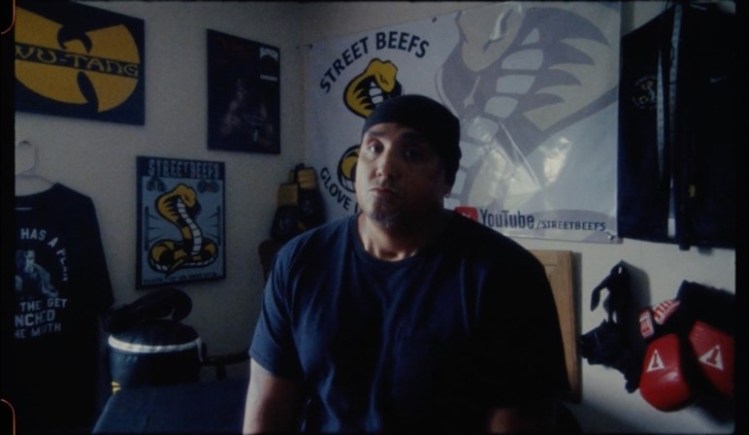
Scarface’s begins his story over a shaky, portrait-like shot of him in his home. Old photos appear as he speaks on his past opioid addiction and how he became affiliated with a gang at a very young age. The clips of him are dark and closely focused which expresses the gloomy and low-spirited mood that parallels his story. He goes on to tell us about his near-death experience after being involved in street violence and the many others that were not so lucky. This is what inspired him to create Street Beefs — a place where people could settle their disputes when words are not enough. A place where no one needs to die.

All the fighting footage is very raw with dramatic whirring motions and sounds as it bounces from man to man. The editor slowed down some of their punches to draw attention to the fierce emotions of the fighters. The fast-paced movement really set the scene and overall mood of the film in a cinematic way. These techniques were very effective in conveying the excitement of the event and making it feel like you are among the spectators.

One of the most impactful scenes featured the fighters embracing each other after a match with smiles on their faces. It did not matter why they fought or who won anymore – it was over. There was no more anger. This perfectly encapsulated the message that the director was trying to convey. Too often does society treat these people as less than human, invalidating their emotions. Sometimes violence is the only outlet they have ever known. Whether it’s anger, sadness, or jealousy, Street Beefs is the one place where they are safe and supported to work through these emotions. They can come as they are and not be judged for their past. The film was powerful in presenting them as the humans they are and deserve to be treated as.
I believe that what makes a good film is that it evokes some sort of feeling or emotion. Lions in the Corner did just that. Through the telling of Scarface’s story and close-up shots in the ring, the director made this documentary feel like a blockbuster movie. It conveyed these feelings of pain, strength, and community in an emotionally impactful way. The director was able to capture such a unique energy that shifted my perspective on felons that have been ostracized from society.
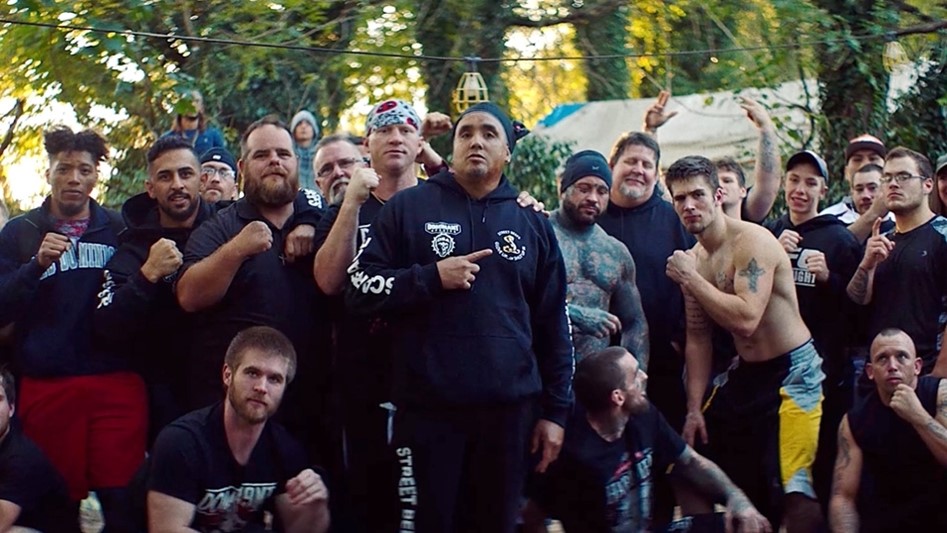
The film closes with a shot of the Street Beefs community clustered together in a place that has become like a home to many. The outcasts of society: proud, united, and alive.
 Film reviews for anthropology passionates