

Director: Murray Siple (2008)
Length: 59:32
Film: https://www.youtube.com/watch?v=zi-f_J6hV-g
Trailer: https://www.youtube.com/watch?v=-5JHYt7n58E
Keywords: alcoholism; homeless; marginalized; freedom; sports
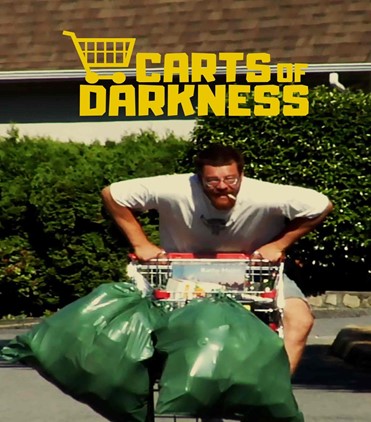
Murray Siple’s “Carts of Darkness” is a subversive take on Vancouver’s at-risk homeless population. It presents subjects that are eclectic and three-dimensional to humanize preconceived notions of these at-risk individuals. The characters presented in this film are considered morally ambiguous, allowing the viewer to form their own opinions about the subjects being filmed. The director’s use of marginalized people and spaces highlights social hardships such as alcoholism, constraints of unemployment, mental health, and poverty as a result of that very marginalization. These themes are present throughout the film and fuel the characters’ behaviour and mannerisms.
Many of the subjects are captured within subversive spaces in society, consisting of rugged environments such as bushes and parking lots. Murray employs these unconventional settings to converse with the subjects, which adds a level of intimacy to emulate the idea of living between the cracks. Murrays use of ethos through the lack of non-marginalized subjects echoes the message of being visible but not within sight. An impactful message repeated throughout the film is that the subjects reflect their mode of subsistence, these individuals must rely on the collection of the same bottles that keep them shackled to the fringes of society. This cycle of re-traumatization creates a self-perpetuating system of suffering. Another fascinating perspective is the characters’ relationship with their tools of use, the shopping cart. The shopping cart being an everyday object overlooked by the average person highlights the ignored poverty of an everyday object and a lack of compassion the characters experience. From the perspective of “Big Al” the endless creativity and freedom when using shopping carts parallels his own lifestyle, being unchained to the social contract of a nine to five job.
The struggles felt by characters such as Big Al and Fergie are prevalently displayed through their consistent incarceration and intoxication to escape traumas untold to the viewer. The director’s ability to capture fragments of the subject’s broken pasts aids in understanding the deeper meaning behind this fusion of freedom and self-destruction. The suffering and turmoil are offset by each individual’s unique abilities such as Fergie’s beautiful singing, or Al’s philosophical self-reflection. This process truly humanizes each renegade in their own way. Stiple’s directive to humanize and present unaltered subjects to the camera reiterates his past experiences filming raw moments of athletic feats in his sports films.
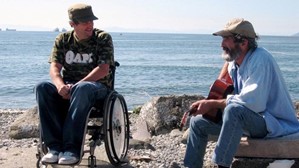
Siple’s presentation of the film is highlighted by his own experiences of marginalization. This empathetic positionality creates a raw and visceral experience that rocks viewers to their core. The movie takes a lighthearted and unadulterated perspective on its characters but still maintains their humanity, and does not romanticize their struggles. The social implications of incarceration, death, starvation, and homelessness are left as open-ended topics that create a dialogue on our current support networks for at-risk homeless populations. Murray’s close and intimate connections with each character create cascading layers of unique fleeting experiences. This intimacy allows the viewer to peer into the most vulnerable and fragile facets of street harden men. The director’s reflexive perspective and constant self-criticism allow him to never overreach with his requests to dive deeper into the world of cart racing.
This ethnographic sports film is shot from a grounded and realistic perspective with the director acting as a principal subject within the narrative. Due to the relationship with each of the subjects, Murray can freely flow in and out of the shots, organically interacting and sharing experiences. The director and subjects both find common ground coming from marginalized perspectives, a love for the risky life, and being rough around the edges. This intimacy creates a very authentic experience that is not inhibited by social constructs, allowing kinship relations to be formed. Stiple’s use of first-person perspective lends itself to his previous works of fast-paced sports films; the use of rushing wind and narrowly passing cars also puts the viewer in the seat of the cart kings. The layered process of walking in one’s shoes allows for the subjects and viewer to share a bonding moment of speed and danger, similar to the perspectives of Big Al and his love for racing.
The use of low-budget film equipment and editing grounds the camera’s perspective while adding a nostalgic feel to the film. The director relies heavily on their surroundings, specifically the Grouse mountains and the North Vancouver cityscape. This creates an overshadowing presence that reflects the societal oppression felt by the subjects. The use of panoramic shots breathes life into the landscapes inhabited by these adventurous vagabonds. The freedom to explore and understand the dynamic surroundings of concrete and forest gives the viewer a freedom that is experienced by our main protagonists. The thrill and rush of this ethnographic sports film are unequivocal, drawing the audience into a world of love, danger and freedom.

 Film reviews for anthropology passionates