
Title: Grabbing Dignity
Director: Cristian Filipe Ros Pilar
Year: March 2017
Duration: 32:06
Keywords: Dignity; housing; community; space; place
Them vs Us: Grabbing Dignity is one community’s struggle to keep their dignity in the face of the Chilean governments forced relocation from an ‘illegal’ immigrant community into state sponsored subsidized apartments.
Ethnographer / Director Cristian Filipe Ros Pilar introduces the audience to Gina and a small group of Chilean women. Living on the outskirts of Santiago, Chile, we meet them 15-years after they built a new community on16-hectares of land illegally appropriated, in 1996. Appropriated with the purpose of providing their families with decent housing.
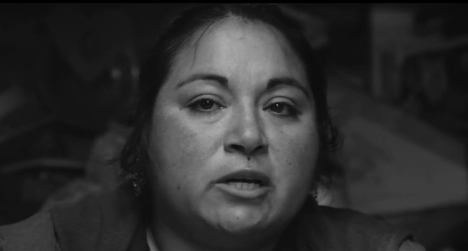
Grabbing Dignity is the lives of a group of strong, resilient, and determined women who carve out a new way of life and living, creating a community of love, support, and family under the most difficult and trying of circumstances – extreme poverty. Pilar’s film is about one woman, her community, and the trauma of having everything they built with their blood, sweat, and tears destroyed with state imposed forced relocation to a subsidized housing project. All the while struggling to keep their dignity.

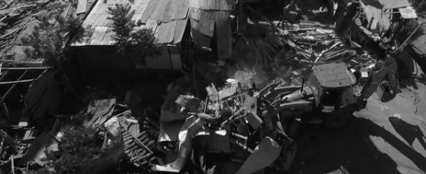
Pilar’s cinematography and use of master shots at the beginning of each chapter, establish the immigrants place within the community, the trauma of watching the destruction of their homes, finally, a view of a group of apartment buildings that will become their new ‘homes’.

The master shots are followed with a brilliant use of wide shots focusing on individual participants often followed by very wide shots giving the audience a sense of the participants place within their home or community space. Pilar’s combination of structured and semi-structured interviews, narrative and observational cinema draws his audience even further into the lives and lived experiences of the women and children of this immigrant community situated on the edge of Santiago Chile.
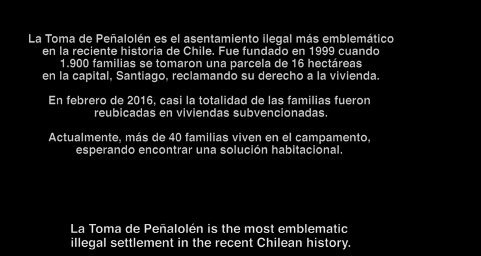
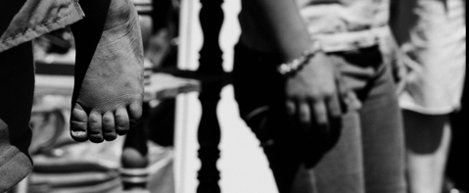
Pilar’s film techniques are varied and expertly applied, what stands out the most for me are his wide / long shots where the focus is solely on the individual. Shots that force the audience to look into the eyes of the participants, feeling what they feel. The most striking part of Grabbing Dignity for me is Pilar’s use of sound / absence of sound. A black background with the history of the Gina and the immigrant community overlayed in Spanish, filmed without sound, very much like a silent film. Montage footages with visual stills of a lone bed, the cameraman on his knees capturing a child’s foot, a woman yet we do not see faces, a hint of what is to come? Possibly.

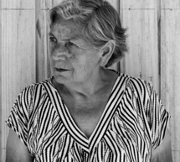
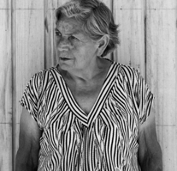
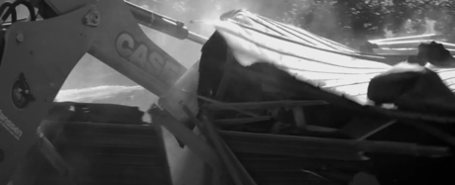
An image of an older woman standing by a fence, the shot begins with a closeup of her face the camera gently pulling back, revealing more of her body as she watches the destruction. In the background, the sounds of heavy equipment tearing their homes down. The absence of sound and imagery beg the audience to find the deeper meaning of what Pilar is trying to express.
His audio and visual use of effects make the film powerful. The audience is engaged, we feel the anger, the frustration. Gina’s trauma of “becom[ing] a lump” in the eyes of mainstream Chilean society, simply because she created space for herself and her family and her sense of indignity comes through when she says that “I believe the worst you can experience, you experience in an illegal settlement”[1]
Pilar constructs a place of dignity, a space that can be called your own, no matter what it appears as on the outside it is what is on the inside that is important. “One brings dignity with oneself . . . not something you buy in a supermarket”[2]
Grabbing Dignity is the story of these women’s fight to hold on to their dignity, their sense of place in the face of abuse and humiliation.
[1] Grabbing Dignity, interview with Gina 06:25
[2] Grabbing Dignity, interview with an elder 23:54
 Film reviews for anthropology passionates