
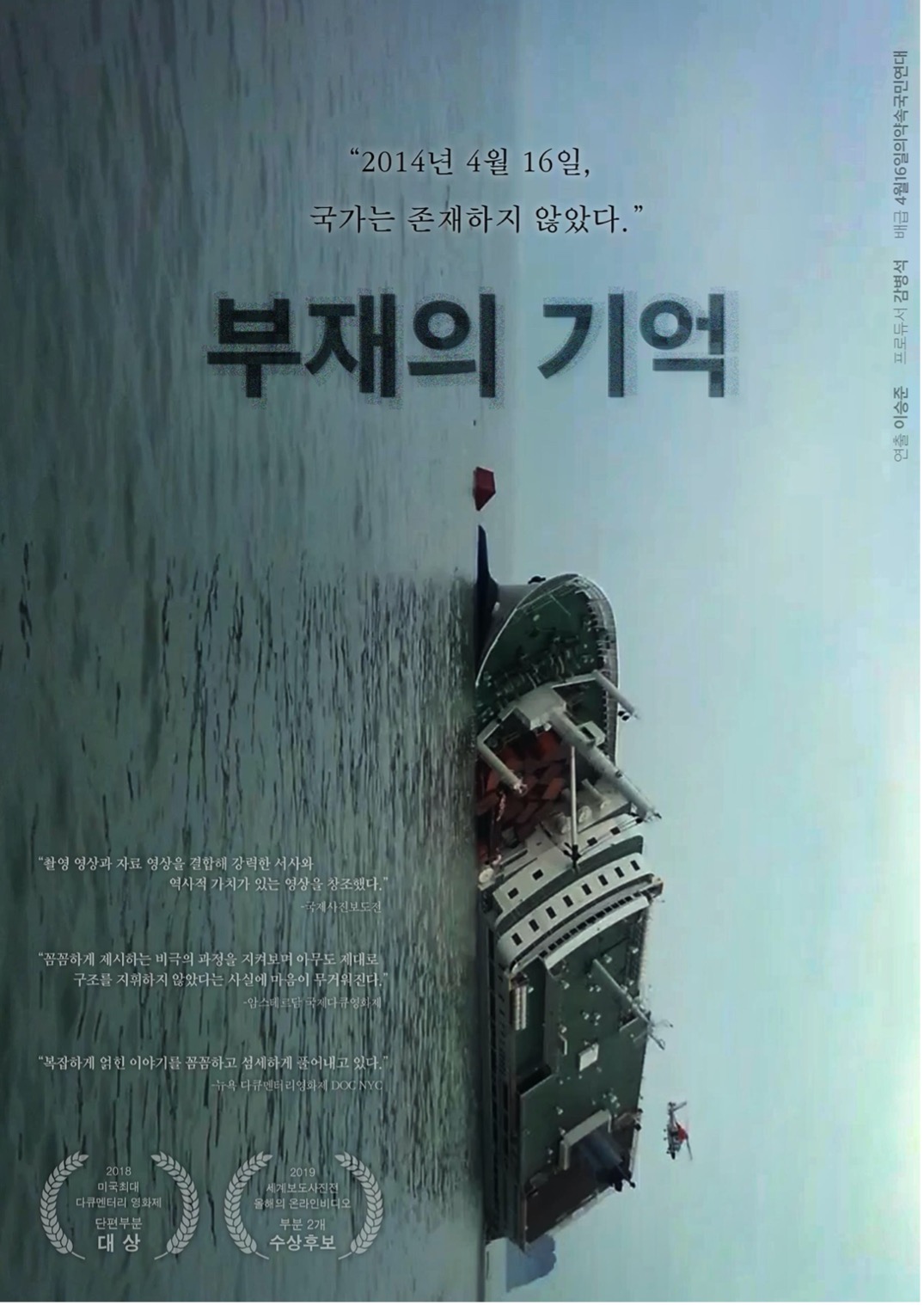
Title: In the Absence
Director: Yi Seung-Jun
Producer: Gary Byung-Seok Kam and Field of Vision
Year of Release: 2018
Length (duration): 28 minutes
Keywords: South Korea; Tragedy; Ferry; Documentary; Archival Footage; Loss; Anti-government protest
Link(s) to watch the film:
https://www.shortoftheweek.com/2020/01/21/in-the-absence/
*Disclaimer: the subject manner of this documentary includes death, loss and injustices that may make some viewers uncomfortable.
If you are prepared to endure a roller coaster ride of sadness, anger, disbelief, perseverance and the feeling of loss, I would highly recommend you check out In the Absence. Within the 28 minute run time, director Yi Seung-Jun masterfully uses archival footage (previously filmed videos) , recorded phone calls, court recordings and individual testaments and created it into an immersive viewing experience. The film was also nominated for an Oscar under best documentary short subject.
In the Absence is a 2018 South- Korean documentary that covers the tragic 2014 Sewol ferry disaster. On April 16, 2014, the Sewol ferry traveling from Incheon to Jeju capsized. The ferry was carrying 476 passengers , 325 of those passengers being young high school students from Danwon High. The film documents the time line of that day in detail and follows up with the aftermath of it all. Some of the notable aftermath events included the volunteer civilian divers body retrieval efforts, the anti-government “candlelight” protests demanding the then-president Park Guen-hye to step down and the salvage operation where the ferry was brought to surface.
The title of the film, In the Absence, truly reflects on the overall inaction and incompetence of the Korean Coast Guard and the government officials in their response to the crisis. It also represents those 300 passengers who lost their lives in the disaster and the impact of their absences on their families and loved ones.
As I stated earlier, the film was presented in a very unique way. One of the major reasons this documentary stood out was because it focused a lot on the Sewol ferry tragedy and broke down that day chronologically from the first passenger phone call to 119 (Korean’s emergency service phone line) to the ferry boat fully capsizing and trapping 300 passengers inside. I found the creative direction of the film to be very impactful as the cuts of the ferry boats sinking exterior and the phone call recordings between the Korean Coast Guard and the government officials really shows how mismanaged and disregarding their thinking was in time during the emergency. The film does a good job in tapping into the universal feeling of loss and making the viewer care for the outcome of the injustice.
Although at initial glance, one would say that this films approach falls more into the journalistic category, I would argue that the film has a lot of ethnographic elements to it. The main reason I say this is because of an interview between the director, Yi Seung-Jun, the producer, Gary Byung-Seok Kam and the Field of Vision organization (link for the interview here: https://www.fieldofvision.org/in-the-absence-interview) that gave a lot of insight into the thought process in making the short documentary. The decision to make a film on the Sewol ferry disaster was ultimately down to the political environment, timing and compassion. There was a deep distrust between the Korean citizens and the Korean government and that distrust only concrete itself when the government lacked a response to the Sewol ferry crisis. This set off a chain of events as more and more people were opposed of the then- president Park Guen-hye and the 2016-2017 candlelight took place. The Sewol ferry disaster was once again in the spot light as the families of the victims called for the government to take accountability and for Korean citizens to never forget..
Another reason why I think this film can be an ethnographic film is because of the anthropological like approach the director had when filming the victims families. A connection was made between the film makers and the association of the victims’ families as they supported the project. They shared a common goal in getting the events of that day out to the public and for people to never forget the injustices of that day. The filming of In the Absence was done in 2017. A rule that the director had for himself was to not impose or cause any more pain for the families. He watched the families grieve and suffer trauma from the side and just captured the difficult moments. The footage he took of the families when they were watching the ferry resurfacing showed the start of the families long road to closure.
 Film reviews for anthropology passionates