
Title of documentary: Yok Anasının Soyadı (Mrs. His Name)
Director(s): Nande Cayir
Year of production: 2012
Length (duration): 17 minutes
Keywords: Names; Identity; Women Issues; Marriage; Tradition.
Link to watch the film: https://vimeo.com/48432993
Eloise Dion-Lafortune
“There are a lot of subjects to film, couldn’t you find anything else?” This line is one of the first comments the filmmaker gets when she starts interviewing people on the topic of women refusing to take their husband’s last name upon marriage in Turkey. The filmmaker, Nande Cayir, spends the rest of her 17-minute film trying to answer this question; why is the topic of name changes one worthy of being spoken about?
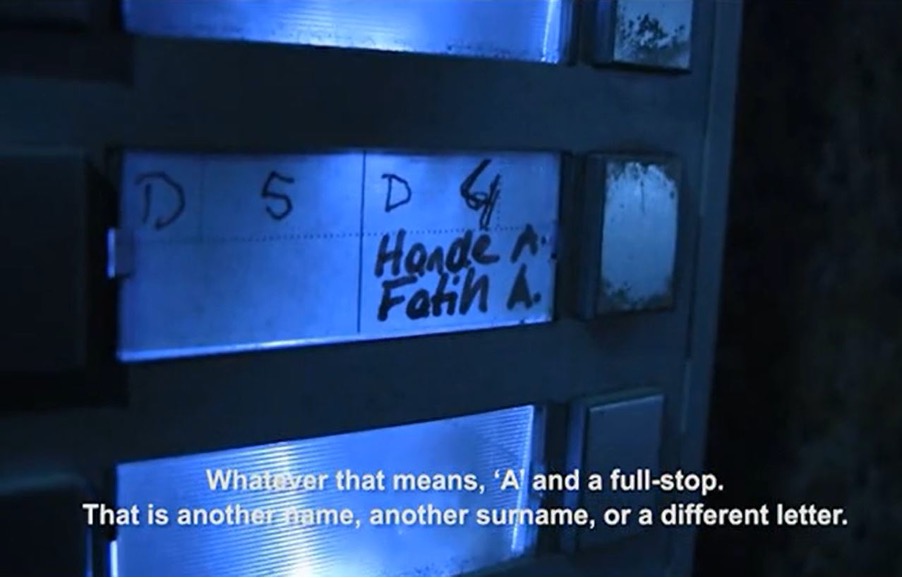
In the movie, “Yok Anasının Soyadı” (Mrs. His Name) by Nande Cayir (2012), she interviews men and women on their thoughts about the relatively new practice of women adding their husband last name to their or keeping their own madden names when they get married. Through a series of interviews, the film brings to light the two very different conversations that are happening for women and men around the subject of name change in the country. Simply put, the men in the movie are framing the conversation in terms of social traditions being violated while the women are framing it primarily as an issue of personal identity.
These two conversations are strengthened through the differing interview techniques used in the creation of the film. The first few interviews are done completely in voice-over, with seemingly unrelated footage running in the background while the filmmaker asks men for their opinions on the matter. This has a way of distancing the men from the issue they are speaking about. The fact that we cannot see the faces of the men she is talking to during these exchanges strengthens the idea that the topic still resides within a grey area of social acceptability. In other words, it creates a sense that it is not a topic the men in the interviews feel is personal or very important to them.
On the other hand, when the filmmaker interviews women, she makes those accounts feel intensely personal. This is not only achieved through showing the women’s faces as they speak to the camera, but also through the fact that they are telling their own stories relating to their name changes. One example is of a woman named Asuman Bayrak, who had to go to great lengths to keep her name. Her story is one of stolen personal identity and the quest to gain it back through a battle with the legal system. Through its focus on women’s experience, the second half of the movie shows the importance of names and their deep links with identity, especially for the women who were forced to change it.
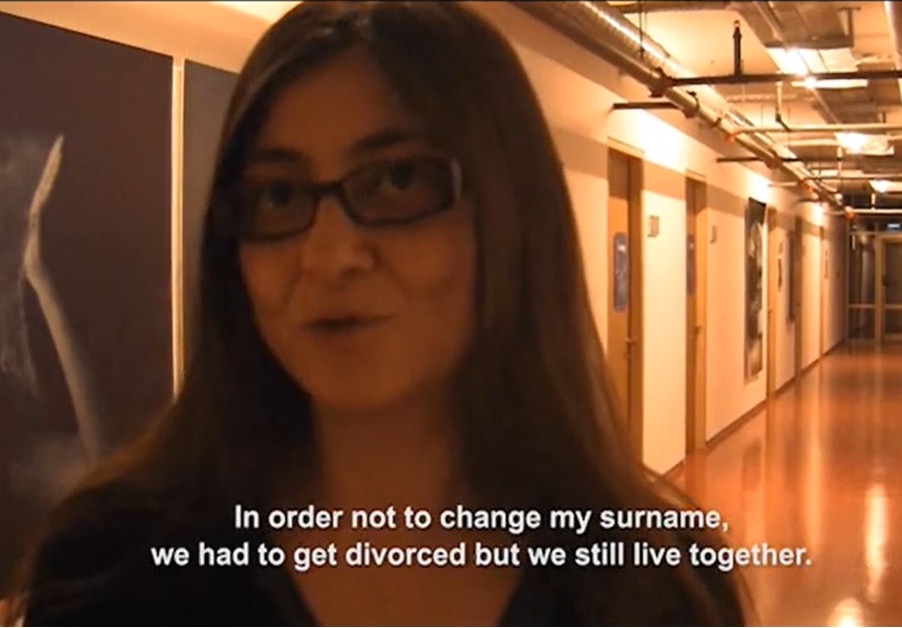
These topics are especially interesting when we compare them to places like France and Quebec where a woman cannot take her husband’s name upon marriage. Quebec has seen a growing movement to allow women (and men) to choose whether or not to take their spouse’s names upon marriage, citing that it is infantilizing to remove the decision from people. Similarly to the movie, the article “Hey Quebec, it’s 2017, let me choose my name” (2017) makes the argument that removing people’s choices to change their names removes their agency as it relates to an important decision connected to their identity. “Yok Anasının Soyadı” (2012) also contains clips from French and American movies where the change of one’s name is linked to the creation of a new identity. Again, the idea that a name is an identity that can be replaced or lost through acts like marriage and divorce is reinforced. It is also explored through the story of a recently divorced woman who wonders about the meaning of her ex-husband’s name now that it no longer belongs to her. Who is she now that she must shed away her married identity and return to who she was before?
The film explores the importance of name changes for women upon marriage and found that for certain women name changes are tightly woven into their sense of identity. Nande Cayir does a good job of exploring the two very different conversations happening around the issue of name changes, with one focusing on tradition and the other on identity. Throughout the interviews, we get a real sense of the distance that exists between the men and the issue, while it is clear that it is a deeply personal issue for the women involved.
References
Cayir, N. (2012). Yok Anasının Soyadı. https://vimeo.com/48432993
Hey Quebec, it’s 2017, let me choose my name. (June 16, 2017). CBC Radio. https://www.cbc.ca/radio/the180/stop-funding-catholic-schools-restore-trust-in-the-neb-a nd-let-me-change-my-name-1.4162978/hey-quebec-it-s-2017-let-me-choose-my-name-1. 4163025
 Film reviews for anthropology passionates