
Da Hillsook Wedeen: A Review
General Information:
- Da Hillsook Wedeen
- Director: Hope Strickland
- Year: 2019
- Duration: 16:26
- Keywords: Shetland ; Scotland ; Folklore ; Invisible author ; Scottish Films
- Watch: https://boap.uib.no/index.php/jaf/article/view/2795/2768
Directed by Hope Strickland in 2019, Da Hillsook Wedeen tells the story of an old Shetland folk tale of a tragic loss of ships at sea through the voice of Shetland woman Marjolein Robertson. Despite its relatively short length, it manages to convey to the audience a message of the incredible resilience of a people who have endured, and continue to endure, immense struggle.
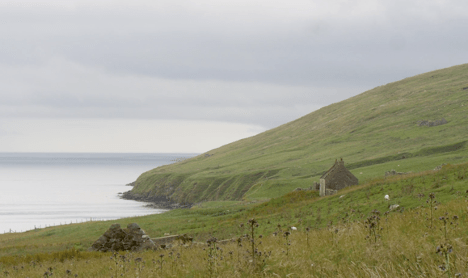
For the majority of the film, the camera focuses on only two things, the harsh but beautiful wind-battered Scottish coast, and the young woman who tells the story. The film’s use of the invisible author technique respectfully places all of the focus on her and the landscape, thus allowing the people and place of Shetland to be entirely in control of the telling of one of their treasured folk tales. She speaks with a heavy regional accent, using a lot of local terms: “makin’ a fun” meaning joking, “trowie” meaning a race of little men believed to inhabit the hills of Shetland, “docken leaves” for dock leaves.
The tale is one of intense loss, telling of a day in which twenty-two men lost their lives in a terrifying storm that swept along the coast. The Shetland women could do little else than watch and wait for their husbands, fathers, and sons, to return – and many did not. The tale tells of one particular man, Tammy Tamminson, who wanders through the storm until he is saved by a group of little men who bring him to a wedding where he plays the fiddle for them and makes merry. All of this is told by the woman who is interviewed, the pain of the loss at sea clear in the far-away look and at times tears in her eyes.
There is a peculiar intensity palpable in the telling of the tale. This is unexpected given the levity in which folk tales are often told, but the audience immediately realizes that this is no tale told just for fun: the locals of this area, Marjolein included, clearly believe that something very out of the ordinary happened that stormy winter day. There is always more magic to a supernatural story that is believed in by the teller, and this is certainly no exception.
As she tells this tale, the film alternates between her face and the rolling hills and rocky seashore, illustrating the inseparability from and deep connection with the land that the people who have inhabited an area for generations invariably have. It is not, ultimately, a film about the pains of suffering, but rather about the resilience of a people who have had to endure tragedies and loss and yet continue to face them down with fierce resilience. After the tale of Tammy Tamminson is told, she talks about life in the Shetlands today. In a very real sense, it is not any less difficult. The losses at sea still continue, though rarer than before. But a new threat has arisen, less material than before but just as visceral: a threat to their independence as a people.

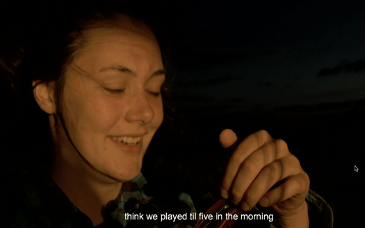
The night of the referendum on Scottish independence, she describes how the room she was in went quiet as it turned out that the vote would be “No”. They felt, in her view, that “something that we had been dreaming about had been slightly taken from us”. Scottish fiddle music is what kept the hope of their people alive in that room: with a laugh she says that they played into the early hours of the morning. Just as Tammy Tamminson had been cheered as he confidently played songs that he had never played or even heard of before at the wedding of the little men after a stormy night which claimed so many of his fellows, many years later Shetlanders played the fiddle until the early hours of the morning. Though temporarily politically defeated, their spirit was unbroken.
I think that’s what this film is really about after all, the way that a long-suffering people can remain joyous and defiantly resilient from generation to generation despite endless travails. This is an undeniably powerful film, and I would suggest it to anyone interested in the persevering and fascinating people of Shetland.
 Film reviews for anthropology passionates