
Birth of a Family (2017)
(Canada, 45 min.)
Dir. Tasha Hubbard
Keywords: Sixties Scoop; Indigenous; Adoption; Family; Connection
Film can be found here: https://www.nfb.ca/film/birth_of_a_family/
Film reviewed by Emma Courtney
Review: Birth of a Family
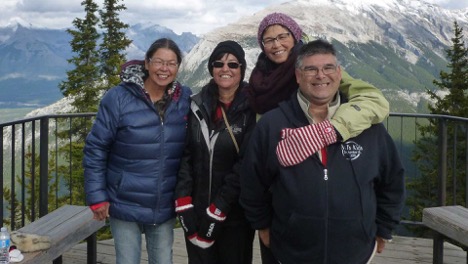
Like most of Canada’s history of injustices against Indigenous peoples, the Sixties Scoop is an event which had and has continued to have devastating consequences for Indigenous peoples across North America. In her third ethnographic film Birth of a Family (2017), Tasha Hubbard explores how this very event has affected siblings Betty Ann, Esther, Rosalie, and Ben and how their reconnection with each other gives insight into the loss of culture and family. This is further accentuated with moments of reflection taken by the siblings resulting from events or experiences which occurred during the siblings stay in Banff, Alberta.
Taken from their Dene mother Mary Jane Adam between the years 1961-1965 and sent as babies (except for Betty Ann who was three) to all white homes, all four siblings grew up without established connections to their birth mother or their blood relatives. Through many years of effort by the oldest sibling Betty Ann, the four siblings are finally able to meet in person in Banff. Hubbard’s choice of showing the wait and then arrival of each sibling shows the extreme importance of the sibling’s arrival as well as the emotional weight of each meeting. Once all four have gathered, the documentary moves on to their arrival at both the house which they all are staying at in Banff as well as their first tour of the town. Of importance to the themes of the documentary, the reflections of the four siblings about their mother as well as their own lives begins with this first discussion in the rental home.
An important theme of Birth of a Family is, much like the documentaries name suggests, the family. The audience is constantly reminded of the reasoning behind the siblings gathering as photos of their birth mother are constantly shown. Tasha Hubbard does an excellent job of showing the seemingly immediate connections between the four siblings as they laugh, joke, and experience getting to know each other more in person throughout their trip. This also reveals just how long Betty Ann had spend searching for each of her siblings with Rose being her first sibling she reconnected with when they were both kids. Having taken more than 50 years for the four siblings to find each other, the documentary highlights in this, both the incredible resilience of the family as well as the extreme failures of the Canadian government.
Tied into family in the film is the loss of culture for the four siblings. Visiting the Buffalo Nations Luxton Museum, the siblings talk to a residential school survivor named Helmer who shows them aspects of pre-colonial life for Indigenous peoples in the area. In the tour they learn certain elements of their heritage as well as gain insight into how little they each understand about their birth culture. Instead of walking through the museum with strong knowledge on what they are looking and learning about, Betty Ann, Esther, Rosalie, and Ben are walking through with the understandings of outsiders. This extreme disconnection from their birth culture can be seen throughout the rest of the film as their perspective on various aspects of Indigenous culture is looking in instead of out. Through both family and culture, Hubbard’s film reveals the most important element which has affected each sibling. Loss.
Through the entirety of the documentary, the various ways in which elements of loss affected each of the four siblings can be seen. From a lack of connection to other Indigenous peoples to the loss of interactions with their birth mother, the Sixties Scoop took both family and culture away from all four siblings. It is through this that the documentaries’ main theme comes into play. Across a thirty-year period, thousands upon thousands of Indigenous children were forced into the welfare system with Betty Ann, Esther, Rosalie, and Ben accounting for a minuscule proportion. This extreme loss of culture and connection, experienced by Indigenous people taken during the Sixties Scoop, displays how Canada had and continues to push an agenda of cultural genocide.
 Film reviews for anthropology passionates