
Title of Documentary: Hearing Madge
Director: Andrea Lewis
Year of Production: 2016
Length: 10 minutes
Keywords: documentary; sound; music; life; death
Link to the film: https://www.shortoftheweek.com/2017/06/13/hearing-madge/
And Vinyly Website: https://www.andvinyly.com/
Hearing Madge is a 2016 documentary short film directed by Andrea Lewis that explores the work of Jason Leach; a Scarborough, UK musician who presses vinyl records sprinkled with the ashes of deceased loved ones, along with their voices and/or some of their favorite music. The name of this business project isAnd Vinyly, and I’ve included a link to their website up above. As Jason mentions, ashes on a vinyl record exactly what you don’t want to happen during the pressing process. However, knowing that a loved one’s remains are the source of the crackling noise acts as a very powerful spiritual experience. Using interviews as the primary source of narrative, Lewis explores Jason’s approach to this project and the emotional impacts that it has on those who are grieving the loss of a loved one. Jason also works with those who are still alive and contemplate how they themselves wanted to be memorialized in this manner, most of whom have a strong connection to music in some form.
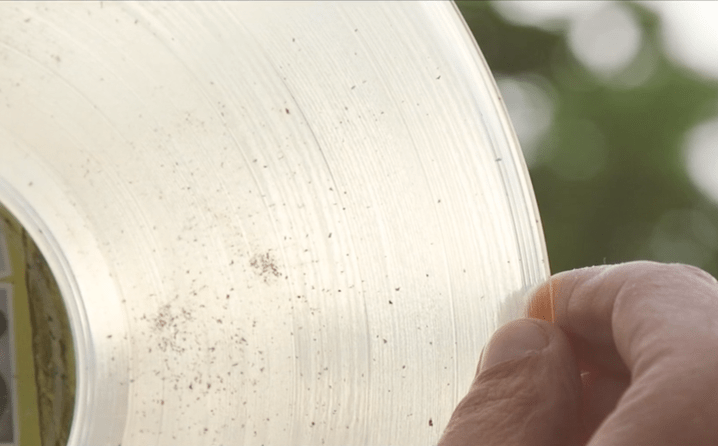
As we get to know Jason at the beginning of the film, a darkish mood begins to settle in. This is further emphasized in the film’s score by the melancholic piano melody that carries throughout. As a musician himself, we learn that Jason’s art is largely informed by the sonic environments that surround him, and that sense of exploration and artistry plays a significant part in the development of this project. In explaining his inspiration for the project, he points out that most people don’t necessarily think about specific memorabilia they want to leave behind for their loved ones after they pass away, especially when death’s inevitable eventuality seems so far in the future. He states that “death makes you live, and makes you make the most of what you’ve got” and while doing so, the camera glosses over various people partaking in miscellaneous activities around Scarborough. This interplay of narrative and visuality contributes greatly to the impact of Jason’s point and the overall circumstances of the film.
Along with Jason, we are introduced to John; a man whose mother ‘Madge’ had recently passed away. He became interested in Jason’s business, and wanted to memorialise his mother by having her ashes sprinkled on a vinyl with recordings of her stories. Throughout John’s interview, he elaborates on how recording stories as a form of memory preservation act as a sort of time capsule for the younger generations of a family, in a way that photography alone cannot accomplish. By sharing John’s perspective along with Jason’s, Lewis gives the viewer another angle on the film’s content and its implications. By, interviewing John and learning about his story, the film effectively evokes a greater sense of relatability and empathy in the viewer.
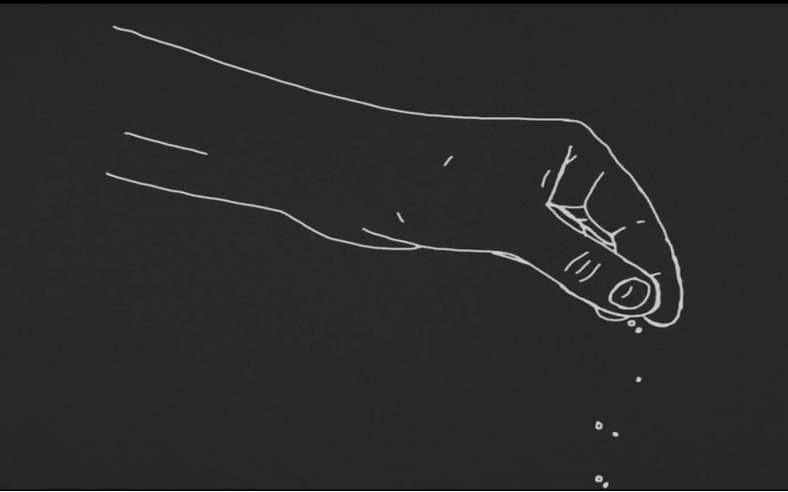
As Jason discusses the procedure of pressing the vinyl with ashes, the film makes use of animation to better illustrate the process. Variation in format can create a sense of emotional balance in the context of film, as animation has the effect of making something conceptually dark more palatable and lighter. This might not always be the case in animations by themselves, but when delivered in balance with camera usage and interviews, I find that it can have that effect. Having the film’s music and dialogue continuing overtop the animation also helped create a sense of continuity in transitioning in and out of the animations. This is a good example of how the film made excellent use of the dynamic relationships that can occur between sonic and visual mediums and how they can act metaphorically as the balance life and death.
The film ends with a listening session of Madge’s record, followed by a close up shot of the record spinning on a turntable. As this point, the film’s music has faded away and the sounds of vinyl crackles emerge to the forefront. This subtle sonic exchange in texture creates a strong emotional impact as we hear her story and realize what is making the sound of the crackles. This auditory shift could act as another metaphor for the transition between life and death, and the possibility that although one might be gone in the physical sense, they live on in the vibrating airspace of our surroundings. Hearing Madge by Andrea Lewis encompassed Jason Leach’s project in a very captivating manner, going beyond the project itself. This was done by the implementation of filmic strategies such as the use of several interview subjects, subtleties in the music and sound design, visual and auditory metaphors, and use of animation. The experience of watching this film caused me to reflect deeply on my own life, not take any moment for granted, and consider how I want to be remembered by those I love.
 Film reviews for anthropology passionates