
Acadiana
Dir. Guillaume Fournier, Samuel Matteau, and Yannick Nolin
2019
10 minutes
Keywords: Festival; Norms; Gender; Sensory; America
https://www.shortoftheweek.com/2020/07/09/acadiana/
Acadiana; Another Day in America
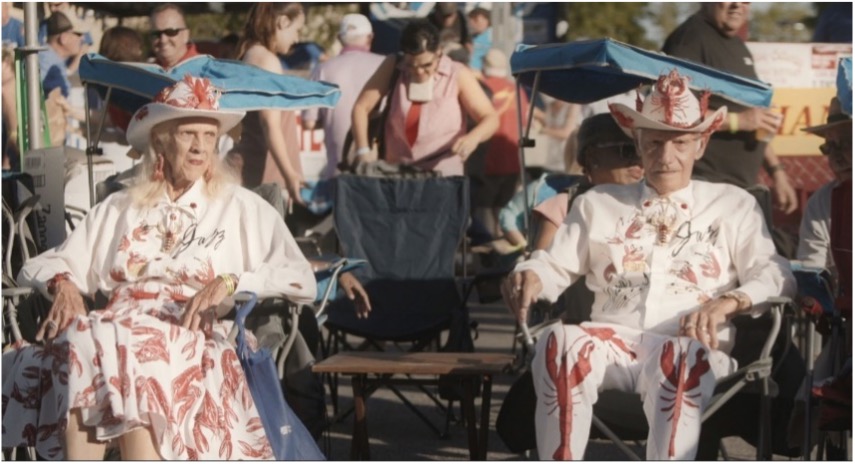
“May 2017. The city of Breaux Bridge, Louisiana, is the theatre of the mythic Crawfish Festival. It’s just another day, in America.”
This brief synopsis, provided outside of the film proper, is as much context as is provided for Guillaume Fournier, Samuel Matteau, and Yannick Nolin’s Acadiana. With no narration, subtitles, interviews, or exposition of any kind, the audience is left to piece together what is unfolding at the Breaux Bridge Crawfish Festival only through other sensory cues. Thankfully this is no trouble due to the visual density, captivating sound design and editing that make this short film an informative if hypnotic foray into the heart of modern America.
As someone who has attended their fair share of traditional small-town events (with varying degrees of willingness), I found that this film effectively captures the often-overlooked feelings of obligation and performative social cohesion that can occur within this context. The way the shots of the festival goers are composed and scored give them a dreamlike, ethereal quality, and is used to align them with the way in which the carousels and other fairground machinery are shown. The rotations and cyclical nature of the rides is made to appear no different from the spinning and shuffling of feet in the couples’ waltz or the steady, or the mechanistic devouring of crawfish in the eating competition. This feeling of obligation and performativity is developed through various close ups and shots panning the crowds, shots in which there are not only no smiling faces but hardly any discernable expression at all. The festival as it is portrayed in Acadiana appears more as a means of affirming a place within a community and of reinforcing norms than as a place of revelry. This seems apparent also to the various children in attendance, shown throughout, observing the undertakings with various expressions of confusion, concern and at best boredom.
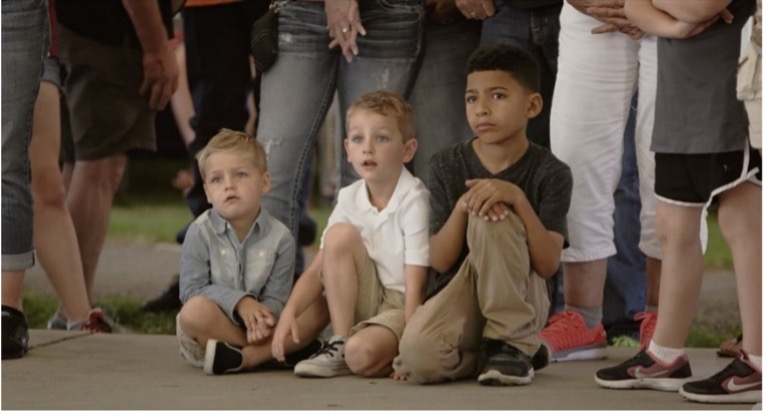
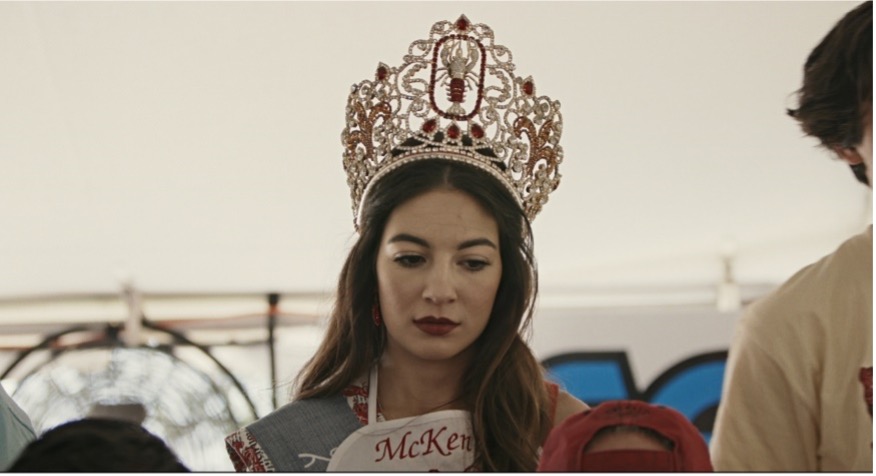
The often dour and severe visages, and automaton-like movement of the revelers provides sharp contrast to the jovial crawfish themed attire and accoutrements adorning them, and is equally mismatched to the cheery live music and events in which they are taking part or observing. One of the few happy faces seen within this film is that of the Crawfish Queen, and given the tone of the event as the film portrays it, and the looks on the faces of the other attendants one has to wonder about the performative nature of this act. The other few happy faces shown are those of the various old white men with whom she dances, and the white-haired patriarchal figure with whom she sits, as the Queen to his King, in the festivals float parade. The whole affair appears to not only be attended by festival goers participating in dominant gender roles, such as the (for the most part) hypermasculine eating contest participants, but is shown as playing an active role in re-affirming those roles and passing them on to the next generation.
The parade is when the film clarifies its position, and the nature of what we are being shown. The previously dreamlike music is replaced by the sound of ominous horns one might expect to hear in a horror movie as our character walks into the woods. Leading the parade is a police car flashing its lights and sounding its sirens, and a number of military personal waving American flag. This sequence is largely shot facing up towards the floats, from behind the children trying to catch candy and beads. The parade sequence and the shots chosen provide a metaphor for the racial inequality that was and is at the forefront of the American consciousness, as the entirely white occupants of the parade floats, including various individuals in crowns and/or on thrones, some atop heavy-duty military vehicles, throw beads down to black children below. Bringing up the rear is a small troupe of young black dancers, on foot and seemingly exhausted, below the floats occupied by the parade’s royalty and their court.
Acadiana is a product of the unique time in American history in which it was shot and assembled. Shot in 2017 and released in 2019 Acadiana was created right in the middle of the Trump era, when questions of identity, inequality and injustice were at the forefront of so many minds. When many of the pre-existing tensions within American social and political life were being amplified and reaching breaking points across the country, this film subtly and economically portrays the normalization of some of the everyday structures leading to these tensions, the tension itself, and the darkness underlying even this seemingly innocuous celebration. This tension is made explicit through the increasingly tense soundtrack and the build through the shots of the parade to the films penultimate shot, of the vats of crayfish, steaming and simmering, perfectly visualizing the tension throughout. From here, the tension is released and we end as we begin, watching the mechanisms, bright and colourful, as dreamlike music plays. Despite the tension, this is after all another day in America.

 Film reviews for anthropology passionates